
Benefits of a EGR Delete Cambridge
- Permanent elimination of EGR valve faults
- No more carbon build-up in the intake manifold
- Improved throttle response and power delivery
- Better fuel economy without exhaust gas recirculation
- No more EGR-related warning lights or limp mode
- Extends engine life by reducing internal contamination
- Can be combined with a Stage 1 remap for maximum benefit
How It Works
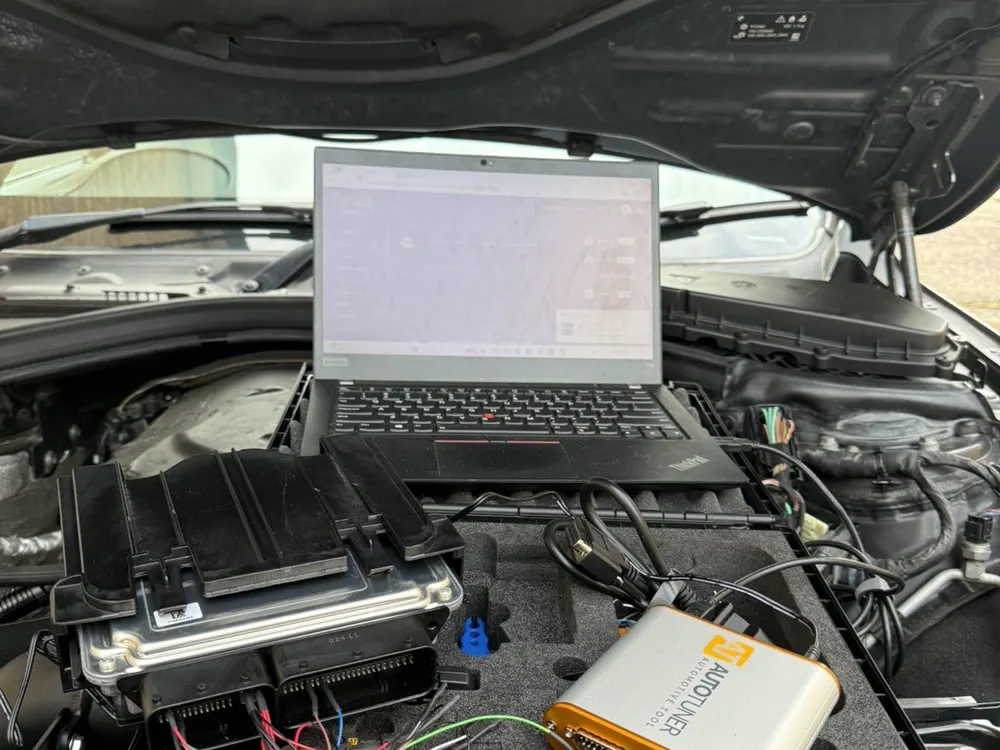
We modify the ECU software to disable the EGR valve and remove all EGR-related fault codes. The physical EGR valve can be left in place or blanked off — either way, the ECU will no longer attempt to open it. This is a software-only solution that takes approximately 1-2 hours.
See your exact gains first
Put your reg into the gains checker for your Stage 1 figures.
Why EGR Systems Cause So Many Problems
The EGR (Exhaust Gas Recirculation) system was introduced to reduce NOx emissions by recirculating part of the exhaust back into the intake manifold. The theory is that lower combustion temperatures produce less NOx. The reality is that hot, sooty exhaust gases passing through the intake cause massive carbon build-up over time.
On modern diesels — especially those used for short, urban journeys — carbon deposits accumulate on the EGR valve, intake manifold and intake valves. The EGR valve eventually sticks open or closed, the intake manifold becomes restricted, and you start seeing fault codes, warning lights and limp mode events. Cleaning the manifold is a £400-£800 dealer job that fixes the symptom but not the cause.
How Our EGR Delete Permanently Solves the Problem
Our EGR delete modifies the ECU software to disable the EGR system completely. The ECU no longer commands the EGR valve to open, and all EGR-related diagnostic monitoring is removed. The result: no more fault codes, no more limp mode, no more carbon recirculating into your intake.
The physical EGR valve can be left in place (we usually leave it) or blanked off mechanically. Either way, with the software disabled, no exhaust gas is being recirculated and the problem is solved permanently.
Will an EGR Delete Affect MOT or Emissions?
An EGR delete does not increase tailpipe emissions in most cases — the EGR system is for in-engine NOx reduction, not tailpipe filtration. UK MOT testing measures tailpipe smoke opacity (diesel) and CO2 (petrol), not NOx. That said, we don't promise MOT results, so please check the current MOT and emissions rules for your vehicle before going ahead.
However, MOT testing has tightened up over recent years. Some testers now visually check that the EGR valve is present. We always recommend leaving the physical valve in place even if blanked, to avoid any visual issues.
Combine EGR Delete With a Stage 1 Remap
EGR delete is one of the most popular combinations with a Stage 1 remap. You get the reliability benefit of permanently disabling the EGR system AND the performance and economy benefits of a custom remap. Our combo price is just £290 — only £40 on top of a Stage 1, significantly cheaper than booking the two services separately.
Vehicles We Cover
- All VAG group diesels (VW, Audi, Skoda, SEAT)
- BMW diesels (N47, B47, N57)
- Mercedes diesels (OM651, OM654)
- Ford diesels (TDCi, EcoBlue)
- Vauxhall CDTi range
- Peugeot/Citroen HDi/BlueHDi
- Volvo D2/D3/D4/D5
- Mazda Skyactiv-D
- Range Rover/Land Rover (TDV6, SDV6, SD4)
Don't see your vehicle? Call us — we cover virtually every modern make and model.